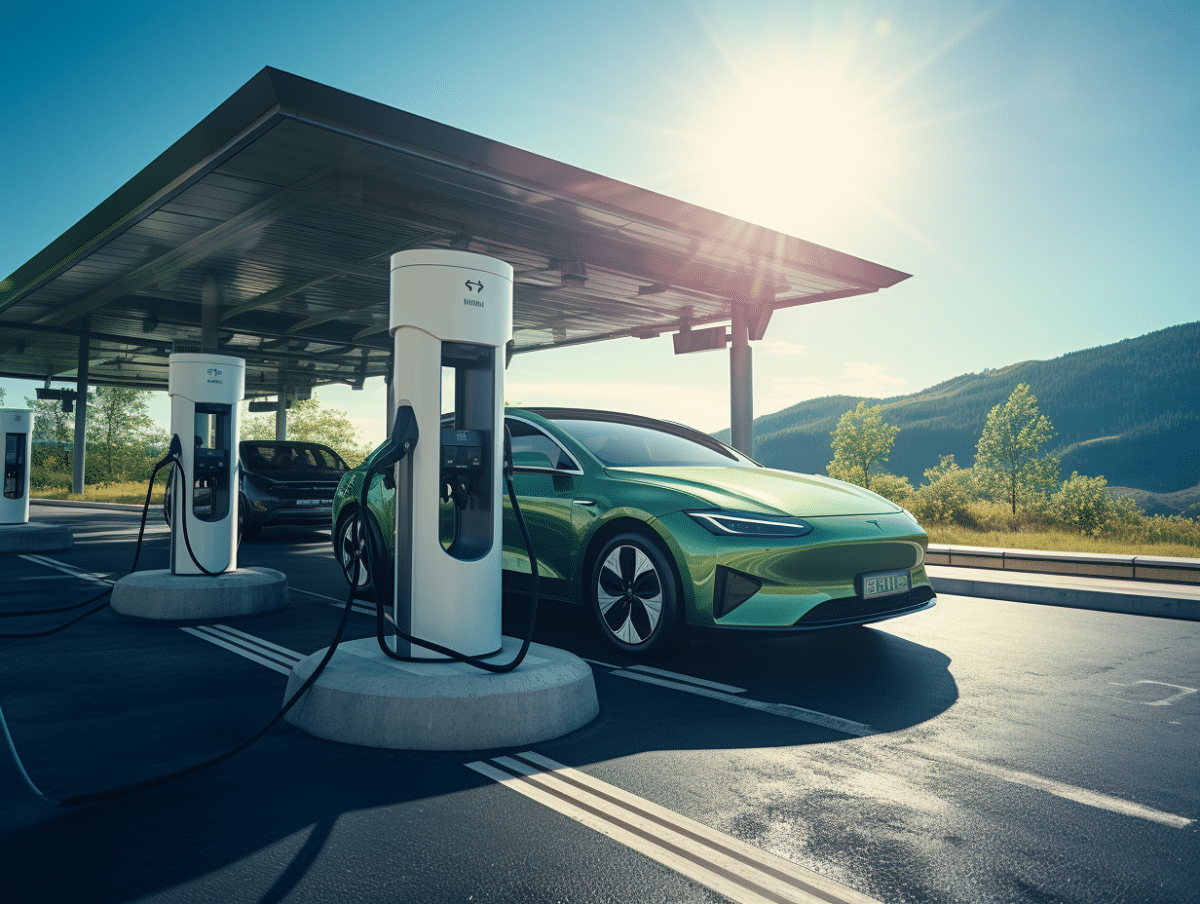
The automotive industry is on the brink of a major transformation, facing increasing pressure from climate change. Manufacturers must rethink their business models and technologies to significantly reduce greenhouse gas emissions. This colossal challenge involves the adoption of alternative powertrains, such as electric or hydrogen, as well as improving the energy efficiency of traditional combustion vehicles. The transition to sustainable mobility requires close collaboration with governments for the development of adequate infrastructures and the implementation of regulations that promote ecological innovation.
The automotive industry’s adaptation strategies to climate change
Ecological transition: a term now embedded in the strategies of automakers. In the face of climate change, the manufacturing of electric vehicles has become an unavoidable horizon. Diesel and gasoline vehicles, symbols of a bygone era, are giving way to zero-emission vehicles. The automotive sector, aware of its role, is adopting environmentally friendly technologies, ranging from aluminum foundries to lighten structures to increasingly efficient batteries despite the challenges of bulk and weight they pose.
The Digital Revolution and environmental requirements are leading to a profound transformation of mobility modes. The emergence of shared mobility solutions such as car-sharing, ride-sharing, on-demand vehicle rentals, and intermodality is challenging the traditional ownership of cars. Mobile applications facilitate these shared trips, thus responding to the climate urgency and the expectations of a generation that views the automobile more as a service.
In this dynamic, the concept of Car System fits as an integrated ecosystem where multimodality and public transport redefine the user experience. Automakers, once criticized for their inaction on climate issues, must now adapt to new ecological constraints and contribute to the rise of sustainable mobility.
Commitment to sustainable manufacturing, waste management, and car recycling are central aspects of the circular economy that the sector must integrate. The Paris Agreement, far from being a mere directive, imposes a framework for action to achieve emission reduction targets, pushing the automotive industry to reinvent not only its products but also its production processes, with a view to climate preservation.

The economic and environmental consequences of delaying the ecological transition
The automotive sector, faced with climate urgency, must move away from the production of diesel and gasoline vehicles, particularly SUVs, which threaten the climate due to their high carbon footprint. Greenpeace urges automakers to accelerate their transition to zero-emission vehicles. Be aware that the insistence on energy-intensive models undermines efforts to limit global warming and contravenes the European Union’s emission reduction goals.
The prolonged trend towards the use of these vehicles represents not only an environmental risk but also leads to economic implications. Companies in the sector could face financial penalties and loss of market share if they neglect to adopt environmentally friendly technologies. Sustainable manufacturing, waste management, and car recycling are becoming imperatives in a circular economy that requires rapid and coherent integration to remain competitive.
Sustainable manufacturing demands radical changes in the design and production of vehicles. Major environmental challenges, such as waste management, require manufacturers to rethink their product life cycle and engage in advanced recycling practices. Delays in implementing these practices can lead to severe consequences, from compliance costs to erosion of consumer trust.
Initiatives like WeProov encourage and support companies’ efforts to engage in ecological approaches. Their role is to catalyze the transformation of the sector by ensuring that sustainable innovation is at the heart of industrial strategies. Considering environmental issues in every aspect of automotive activity is no longer an option but a necessity for the survival and prosperity of the industry in an increasingly climate-conscious world.