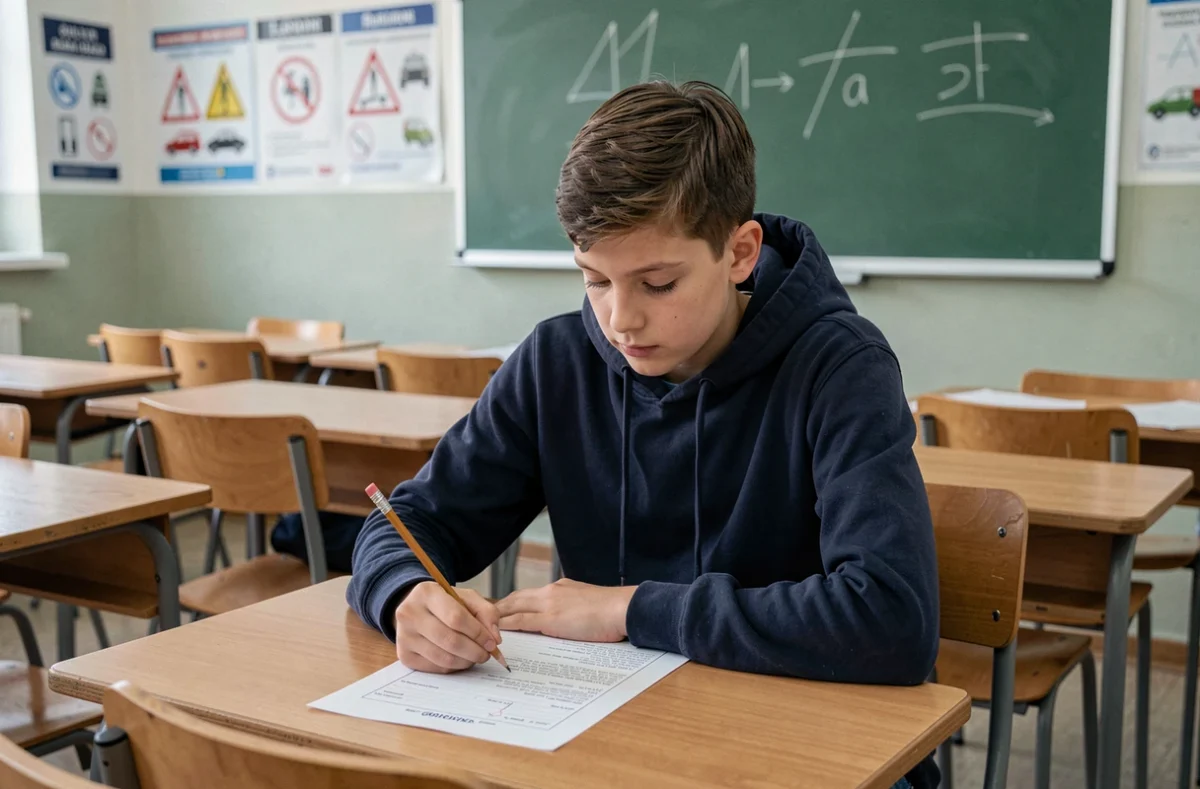
Your child is in fifth or eighth grade, and the school is announcing the ASSR exam. Behind this acronym lies the school road safety certificate, a mandatory exam that conditions access to the AM license and then to the driving license. Here’s what you need to remember to support your child without unnecessary stress.
ASSR and driving license: the concrete link that many parents discover late
The ASSR does not train for driving. It validates theoretical knowledge about traffic rules, risky behaviors, and road safety reflexes. The distinction matters: without this certificate, your child will not be able to access the practical training for the BSR (AM category of the license), nor obtain a first driving license.
In practice, ASSR 2 is required for any first application for a license. This applies to the B license, but also to the A and A2 licenses. A teenager who loses their certificate or does not take it at school will have to turn to the ASR, the road safety certificate, issued by an accredited examination center, a more cumbersome process.
Parents who wish to find useful information on formalabs can delve into the subject, particularly regarding preparation and the stakes of each level.
Calendar and organization of the ASSR exam at school
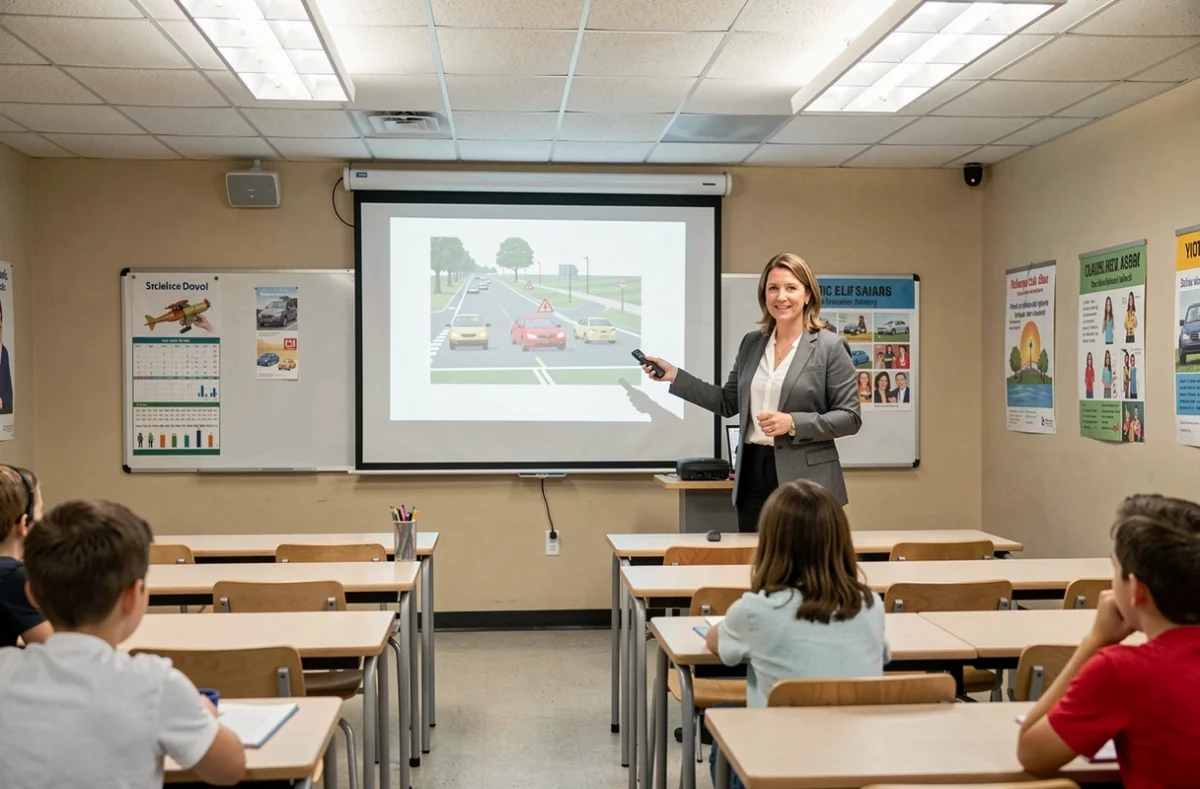
Contrary to what some websites suggest, there is no single national date for the ASSR exam. Each institution sets its own dates within the national regulatory framework. Your child’s school can organize the exam between January and June, according to its internal calendar.
Why is this a point to watch? Because a student absent on the exam day must wait for a make-up session organized by the institution, with no guarantee of timing. If your child is enrolled in CNED or in a non-contract school, the procedure differs: you will need to contact the departmental education services to find out the competent examination center.
Two levels, two classes, two objectives
- ASSR 1: taken in fifth grade, it covers the basics of traffic as a pedestrian, cyclist, or passenger. It allows access to the BSR from the age of 14 to drive a moped.
- ASSR 2: taken in eighth grade, it expands the scope to situations of motorized driving and is a prerequisite for applying for a driving license.
- ASR: an alternative for those who could not take the ASSR in school. It replaces ASSR 1 or 2 and is taken at an accredited examination center (GRETA, town hall, authorized organization).
A point often overlooked: ASSR 1 and ASSR 2 do not cancel each other out. Each has its own utility. A student who fails ASSR 1 in fifth grade can retake it, but ASSR 2 in eighth grade does not replace it for the BSR if the child wants to drive a scooter before the age of 16.
Conduct of the ASSR exam: what your child will encounter
The exam takes the form of a multiple-choice questionnaire. The student watches video sequences showing real traffic situations, then answers questions about applicable rules and appropriate behaviors.
The passing threshold is set at 10 correct answers out of 20. This seems accessible, but the videos sometimes include visual traps: a partially obscured sign, a cyclist in a blind spot, an ambiguous priority. Mistakes often concern details of signaling or the speed limit in certain areas.
The exam lasts about twenty minutes. There is no disqualifying score by theme: only the total counts. In case of failure, the student can retake the exam during a make-up session organized by the school.

Preparing for the ASSR effectively: what really works
The classic trap for parents is to believe that the road safety education provided in class is sufficient. The lessons at school lay the groundwork, but active preparation for the MCQs makes all the difference on exam day.
Reliable resources and revision method
The official road safety education website offers free training tests with the same types of videos as the actual exam. This is the closest support to the exam conditions.
Your child should practice in several short sessions rather than one long revision the day before. The questions focus on road reading reflexes: recognizing a sign, estimating a braking distance, identifying who has priority at an intersection.
- Complete at least three full training series in the weeks leading up to the exam
- Systematically review the questions missed to understand the logic of the correct answer
- Discuss traffic situations during car trips (a concrete exercise that anchors knowledge)
A seemingly trivial but significant piece of advice: ask your child to explain a priority rule to you. If they can explain it clearly, they will recognize it in a video.
Keep and transmit the ASSR certificate
The certificate is issued by the institution in paper form. Keep this document as a full administrative document. It will be required when applying for the BSR or driving license, sometimes several years after the exam.
In case of loss, you must contact the school that organized the exam. If the institution can no longer provide a duplicate, the procedure goes through the rectorate or the departmental services. This process can take several weeks, a delay that further postpones the application for the license.
The ASSR remains a simple exam in its form, but its administrative consequences are real. A lost document or a missed exam can delay your child’s access to independent mobility by several months. It’s better to address this as early as fifth grade than to discover the problem at 17, license application in hand.