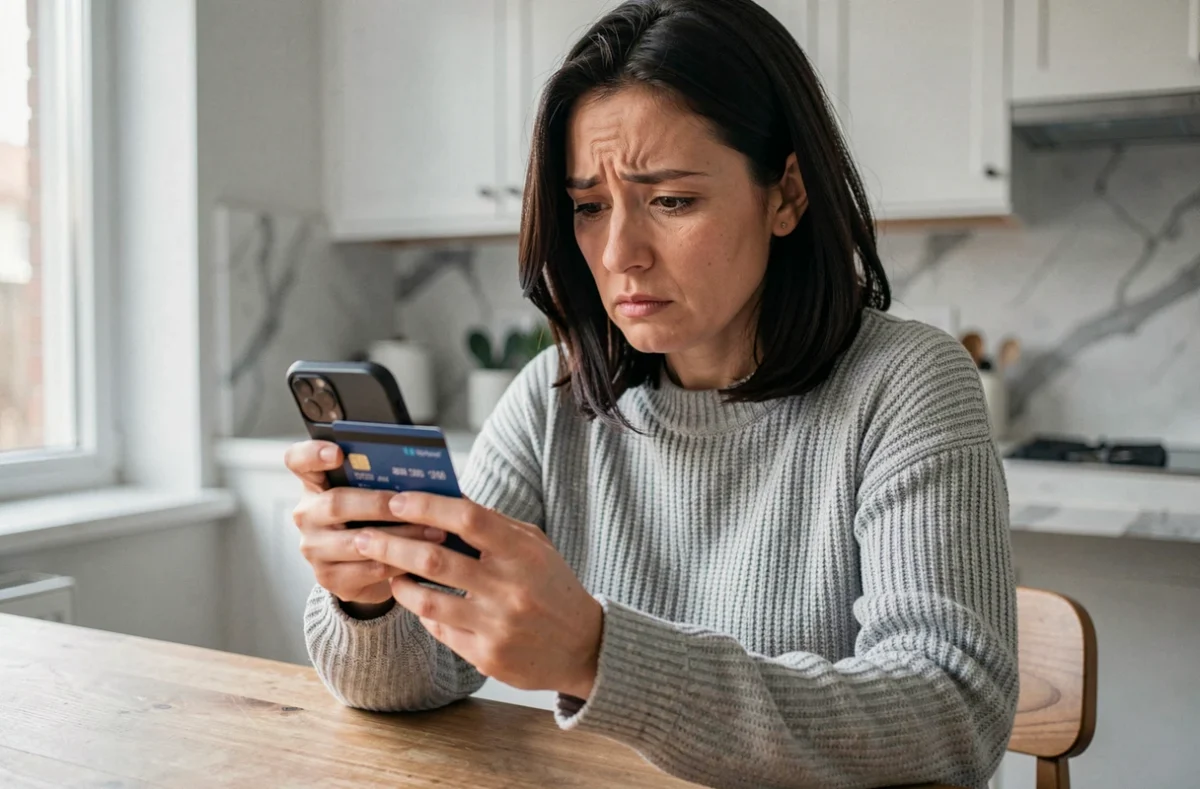
The temporary locking of a bank card suspends payment and withdrawal authorizations without canceling the card itself. Unlike a cancellation, which permanently destroys the payment method and triggers the issuance of a new card, temporary blocking works like a reversible switch, which can be activated and deactivated in seconds from a banking app or an online customer area.
Temporary Locking and Permanent Cancellation: Two Distinct Mechanisms
The confusion between these two operations remains common. The temporary locking freezes transactions while clarifying a doubt: a card misplaced in a bag, forgotten at a friend’s place, or a suspicious payment spotted on a statement. The card remains physically valid, its number does not change, and recurring payments already authorized can continue depending on the bank.
The cancellation, on the other hand, is irreversible. Once registered, the card is permanently deactivated. The bank issues a new one, with a new number and a new code. All payments recorded with online merchants must be updated manually.
Before deciding to temporarily block a bank card, it is essential to assess the actual level of risk. A doubt about the card’s location justifies a lock. A certainty of theft or confirmed fraud necessitates immediate cancellation.

Blocked Bank Card: What Continues to Function and What Stops
The exact behavior of the lock varies from one institution to another, and this disparity deserves to be understood before activating the function.
Operations Generally Suspended
- In-store card payments (contact and contactless) are declined as long as the lock is active
- ATM withdrawals are blocked, even with the correct code entered
- Online payments by entering the card number are generally rejected, depending on the bank’s policy
Operations That May Persist
- SEPA direct debits and standing orders do not go through the card: they are not affected by the lock
- Some recurring subscriptions already validated by the merchant before the lock can still be charged
- Transactions in progress at the time of locking (payment validated but not yet debited) may sometimes be completed
The lock does not protect against payments already authorized before its activation. Checking the history of recent transactions remains necessary at the time of locking.
Mobile Payments and Digital Wallets: A Common Blind Spot
The 2025 annual report from the Payment Means Security Observatory (OSMP), published by the Bank of France on September 7, 2026, indicates that mobile payment now represents about one in five proximity card payments. This proportion changes the game for anyone locking their physical card thinking they have secured everything.
A card registered in a digital wallet (phone, smartwatch) can, depending on the bank, remain usable despite the locking of the physical card. The behavior depends on the technical architecture of each institution.
After a lock, it is therefore necessary to check in the banking space the list of authorized devices and, if necessary, revoke the access of the digital wallet separately. Without this step, the locking of the plastic card only covers part of the payment channels.
Fraud by Manipulation: The Limitation That Card Locking Does Not Cover
The OSMP reported a significant increase in manipulation fraud in 2025, particularly involving fake bank advisors, reaching 516 million euros, a 34% increase compared to the previous year. These attacks do not target the card as a physical medium. They target the holder themselves.
A fake advisor who convinces a client to validate a transaction through strong authentication bypasses any protection related to the lock. The card can be blocked, unblocked, or even canceled: if the holder themselves validates the fraudulent payment, the card’s security mechanism does not intervene.
The lock protects against loss and theft, not against social manipulation. In the face of a suspicious call, hanging up and calling the bank’s official number remains the only effective countermeasure.

Unblocking Your Bank Card: Timeframe and Channel Depending on the Bank
Unblocking is done through the same channel as locking: mobile app or online customer area. Most banks make the card operational within seconds after the block is deactivated. No physical manipulation is required.
Some institutions add a verification step (SMS code, biometric validation) before reactivating the card. This additional friction aims to prevent a third party with access to the app from unblocking the card without the holder’s consent.
If doubts persist after unblocking, checking the transaction history during the lock period allows spotting any past transactions despite the lock. If a suspicious transaction appears, moving to permanent cancellation and disputing with the bank becomes the next step.
The temporary lock remains a precautionary tool, not a comprehensive security solution. It covers a specific scenario (probable loss without certainty of theft) and leaves other fraud vectors open. Checking associated devices, monitoring recurring payments, and keeping an eye on manipulation attempts are necessary complements to this function, which was never designed to replace the holder’s vigilance.