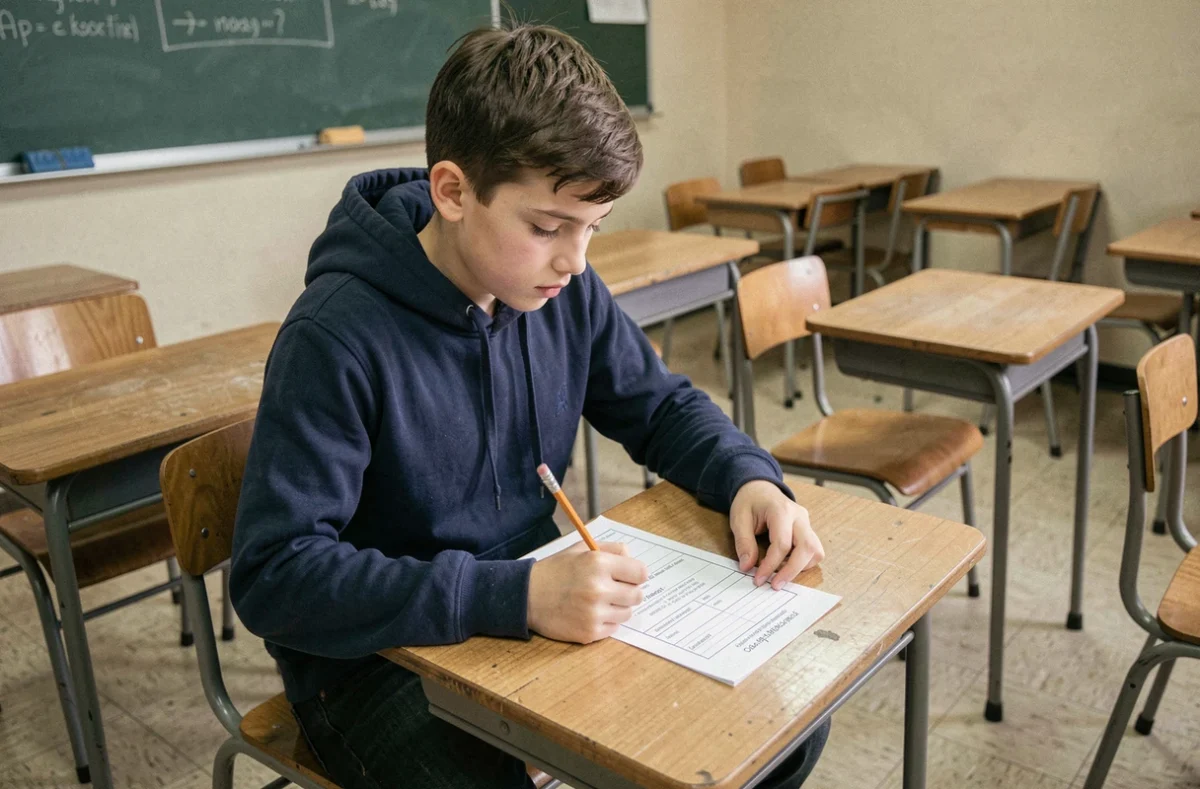
The ASSR is based on a test format that many parents are unaware of. It is neither a driving exam nor a traditional road code test. The school road safety certificate assesses theoretical knowledge and behaviors in traffic situations through a series of video sequences followed by multiple-choice questions. Understanding this specific mechanism helps to demystify the test and support a middle school student without unnecessary pressure.
ASSR Test Format: What Parents Need to Decode
The test consists of twenty questions, each associated with a short animated sequence simulating a real traffic situation. The student has a few seconds to think after each sequence. The passing threshold is set at half of the points, which means that a student can get almost half of the questions wrong and still validate their certificate.
Parental concern often arises from confusion between the ASSR and a driving school road code exam. The questions cover signage, pedestrian behavior, right of way at intersections, mandatory equipment on a two-wheeled vehicle or a moped, as well as less expected concepts like the perception of risks related to alcohol or fatigue.
The scope is broad, and the level of difficulty remains appropriate for fifth-grade (ASSR1) or eighth-grade (ASSR2) students.
A point often overlooked: the questions do not test the memorization of isolated signs. They assess the ability to analyze a dynamic situation. This is a reassuring pedagogical nuance because a teenager accustomed to moving around on foot or by bike already mobilizes some of the required skills. The resources available on the Formalabs site for the ASSR detail this situational logic and allow families to prepare together.

ASSR1, ASSR2, and AM License: Which Certificate Opens What
ASSR2 is an administrative prerequisite, not a driving authorization. This distinction is the main source of misunderstanding. The certificate obtained in eighth grade conditions access to the practical training for the AM license, which allows for riding a moped or a light quadricycle. It is also required for a first application for a driving license before the age of 21 for individuals born after 1987.
ASSR1, taken in fifth grade, does not grant any direct driving rights. It validates a first level of theoretical training in road safety. Its attainment is not necessary to take ASSR2 two years later, but it constitutes a step in raising awareness in the educational journey.
- ASSR1 (fifth grade): initial theoretical training, no direct consequences on vehicle driving
- ASSR2 (eighth grade): necessary for AM license training (moped, light quadricycle) and for a first application for a driving license before 21
- ASR (road safety certificate): equivalent to ASSR2 for non-schooled candidates, taken in GRETA or training centers
In other words, failing the ASSR does not permanently block a path. The ASR offers a catch-up route outside the school framework.
Adjustments for Students with Special Needs During the ASSR Exam
Schools are required to offer adjustments for students with learning disabilities or disabilities. Concerned parents benefit from contacting the school’s disability referent several weeks before the session.
Extended time and the assistance of a reader are among the most common adaptations. A dyslexic student may benefit from additional time and an oral reformulation of the questions. For students with visual impairments, enlarging video sequences or providing adapted materials can be arranged.
These adjustments do not change the content of the test or the validation threshold. They adjust the testing conditions so that the assessed level remains the same. A parent who anticipates this process avoids last-minute stress and ensures their child has equitable conditions.

Preparing for Road Safety in Daily Life Rather Than Cramming for the Test
The success rate for the ASSR is high in most schools. The theoretical test does not serve as a selective filter. What truly worries parents is their child’s concrete road safety once middle school is over, when they will travel alone on a moped or bike on roads shared with motor vehicles.
Obtaining the ASSR does not equate to knowing how to travel safely. The practical training for the AM license, provided by an accredited driving school, remains the only step that confronts the young driver with the reality of traffic. The certificate should not be seen as an end in itself.
Three concrete areas strengthen preparation well before the exam:
- Commenting on traffic situations during family trips: priorities, blind spots, behavior of other users. Active observation develops the reflexes assessed in the test
- Checking the equipment of the adolescent’s bike or scooter: lighting, braking, helmet. These elements are part of the recurring questions of the ASSR and fall under a regulatory obligation
- Addressing without taboo the effects of alcohol, fatigue, and phone use on driving. The test systematically includes questions on these risk factors, and family discussions anchor these concepts more durably than a multiple-choice questionnaire
Road safety is not limited to a category of school exam. The ASSR establishes a theoretical foundation that only guided practice can transform into real competence. A parent who helps their child analyze daily traffic situations does more for their safety than any intensive revision session the night before the test.