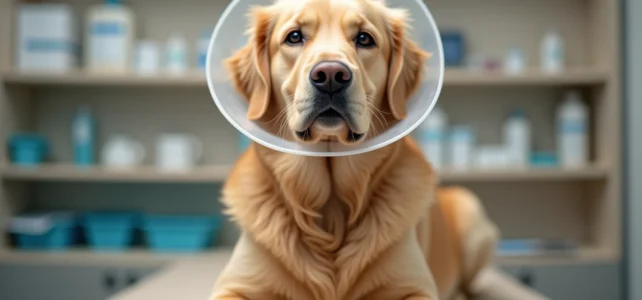
A dog coming out of the operating room with a rigid plastic cone bumps into the door frame, spills its water bowl, and refuses to lie down. We all know this scenario. The cone protects the wound, but it disorients the animal to the point of sometimes creating more stress than the procedure itself. Adapting the dog’s environment and daily routine radically changes how it goes through this recovery period.
Securing the home space before putting on the cone
The majority of owners focus on choosing the model of the cone. The real problem starts when the dog gets home and discovers that its cone hits every piece of furniture, every wall, every corner. The PAW Report 2023 from PDSA (People’s Dispensary for Sick Animals) ranks the rigid cone among the risk factors for domestic accidents: falls down stairs, getting stuck in railings, violent bumps against furniture.
Even before bringing the dog home from the veterinary clinic, one can apply tips for a dog with a cone that start with reorganizing the space. Blocking access to stairs and balconies is the first measure, especially if the cone is worn for more than a few days.
Specifically, this means removing side tables, magazine racks, and small unstable furniture from the dog’s usual path. The rigid cone adds a collision radius on each side of the head. Placing the water bowl in an elevated or wider container prevents the cone from spilling it with every attempt.
- Move the basket or bedding to an open space, away from wall corners and table legs
- Install a safety gate at the top and bottom of each staircase
- Keep electrical cables away that the edge of the cone could snag
- Remove fringed rugs or thick mats where the cone could get stuck
Gradual habituation to the cone: step-by-step protocol
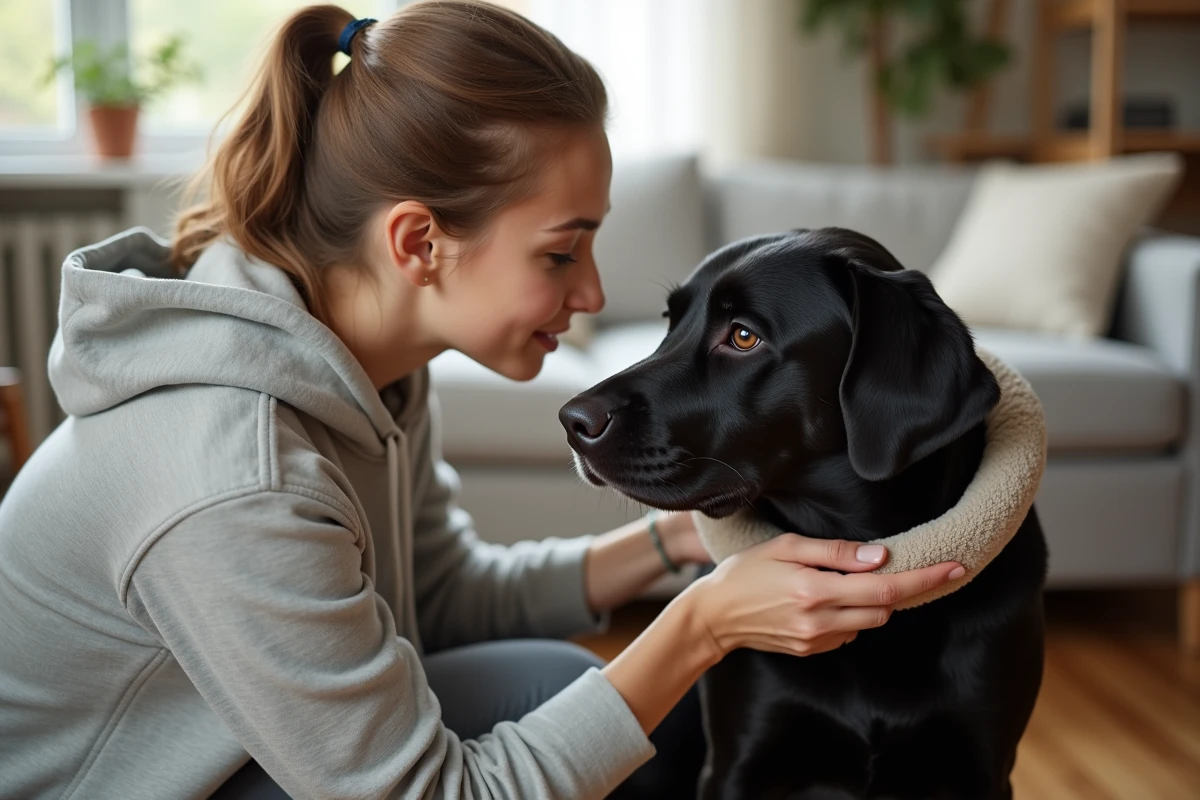
Research presented at the BSAVA 2023-2024 congress by Sarah Heath confirms that positive habituation significantly reduces panic behaviors related to the cone. The principle is the same as for a harness: associate the object with something pleasant, in short increments.
When one has the luxury of preparing the dog before a scheduled operation (spaying, dental surgery), one can start several days in advance. Place the cone on the ground, let the dog sniff it, and give a treat. Then, put the dog’s head through the cone for a few seconds, give an immediate treat, and then remove it.
Increase duration without forcing
Each session adds a few minutes of wear. The dog eats its meal with the cone on, then we remove it. Associating each fitting with food creates a positive reflex instead of a flight response. Responses vary on this point depending on the dog’s temperament, but slow progression works better than a sudden fitting upon returning from the clinic.
If the operation was not planned (accidental wound, skin infection), we do not have this preparation time. In this case, keeping the cone on continuously from the start and rewarding the dog regularly during the first hours remains the most reliable approach to prevent it from panicking and tearing off the accessory.
Calm enrichment during the dog’s recovery
A dog immobilized with a cone that has nothing to do will focus all its attention on the discomfort it feels. The behavior sessions at the BSAVA congress recommend what is called controlled enrichment: activities that engage the mind without stressing the healing area.
Long-lasting chew toys are the most suitable tool during this period. A natural chew bone, a frozen stuffed Kong, or a licking mat (if the cone allows access) keeps the dog occupied for long minutes. We avoid tug-of-war or fetch games that might stress the wound.
Ground tracking and calm tricks
Hiding treats in a rolled towel or in the folds of a blanket forces the dog to use its nose without moving from its bedding. We can also work on static learning: “give paw,” “look at me,” “touch my hand.” These micro-sessions of a few minutes channel mental energy and reduce post-operative anxiety.

Rigid cone, inflatable or suit: which device according to the wound
The classic rigid plastic cone remains the most prescribed by veterinarians because it effectively prevents access to the entire body. It has one major flaw: it disrupts the dog’s peripheral vision and hearing, which amplifies disorientation.
Inflatable cones (like a donut) are more comfortable for sleeping and do not block the field of vision. However, a flexible or small dog may maneuver around the donut to reach a wound on its side or hind legs. They are better suited for procedures on the head or neck.
Protective suits (post-operative bodysuits) cover the torso and protect an abdominal scar without any visual obstruction. They do not protect the legs or head. The choice therefore depends on the location of the wound, not overall comfort.
- Abdominal wound (spaying, tumor): the bodysuit often suffices and the dog tolerates it better
- Wound on a leg: the rigid cone remains the safest solution, sometimes complemented by a bandage
- Eye or ear area: the rigid cone is the only reliable option to prevent scratching
Monitor signs of infection despite the cone
Wearing a cone does not guarantee that healing goes well. We check the wound at least once a day by briefly removing the device in a confined space (closed bathroom) to prevent the dog from licking immediately.
Spreading redness, swelling, discharge, or unusual odor are signals that warrant a call to the veterinarian. A poorly fitted cone can also create friction around the neck, causing secondary irritation that can be detected by passing two fingers between the edge of the cone and the skin.
The duration of wear depends on the veterinarian’s prescription. Removing the cone “because the dog seems healed” before the end of the recommended period remains the primary cause of post-operative complications. Even if the wound appears closed on the surface, deep healing takes longer than what is visible to the naked eye.