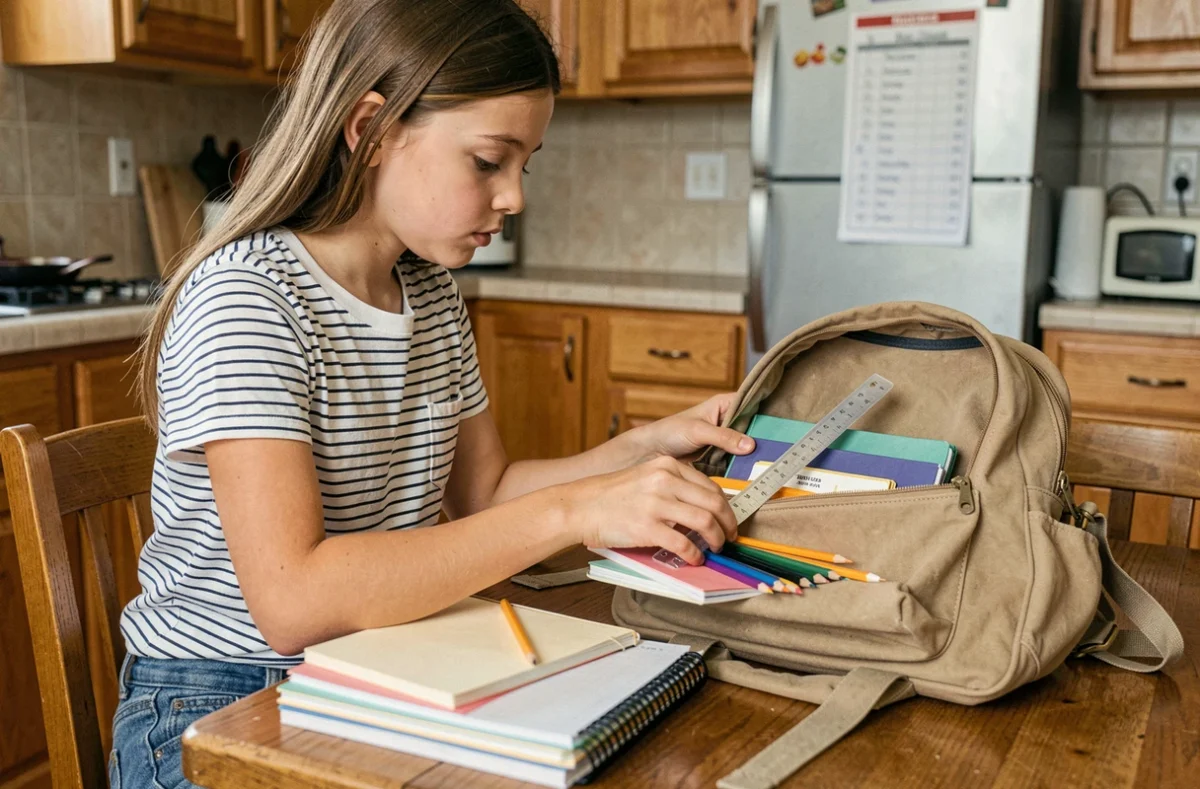
Every September, the school supplies list posted on the middle school’s website gets all the attention. Large notebooks, a scientific calculator, sportswear: the shopping list seems to dictate the budget. Yet tuition at a public middle school is strictly free, since education is provided at no cost. The real expense lies elsewhere, in costs that families don’t always compare side by side.
Cafeteria, transport, insurance: costs that add up more than school supplies
Have you ever added up the cost of school lunches over a full year? Four days a week, from September to June, that can amount to several hundred euros per child. For many families, this expense far exceeds the school supplies budget.
School transport works much the same way. Costs vary considerably from one department to another. Some local authorities cover the entire journey between home and school, while others charge an annual pass fee based on the household’s family quotient. The difference between two departments can amount to several dozen euros a month.
School insurance, often seen as a formality, adds a modest but recurring expense. It is required for optional outings and trips organized by the school. Some home insurance policies already cover a child’s personal liability, which can help avoid paying for duplicate coverage.
Comparing these three expenses with the actual cost of school supplies makes it easier to understand why middle school costs often exceed what parents expect in August.

Scholarships and local assistance: the most overlooked way to reduce middle school costs
Public assistance can cut costs more than hunting for discounts on notebooks. The middle school scholarship, paid by the government to families who meet income requirements, covers some of the cost of school meals or supplies. Applications are submitted online at the start of the school year through the school’s portal.
Beyond this national scholarship, local assistance can make a big difference from one municipality to another. Here are the most common programs:
- School meal assistance, offered by some town halls or departmental councils, which reduces meal prices based on household income.
- Free or discounted school transport, decided by the region or department and sometimes requiring a separate form from the school enrollment application.
- The middle school social fund, managed by each school, which can cover unexpected expenses on a one-off basis (school trips, sports equipment, glasses).
These programs all have one thing in common: they aren’t automatic. You have to apply, often before mid-October. Many eligible families miss out because they don’t know about them. The school office and the CAF website remain the two most reliable sources for checking your eligibility.
School supplies: cut costs without compromising on quality
School supplies are a visible and flexible expense, provided you sort out what needs to be bought new and what can be reused.
What can be kept from one year to the next
A compass, set square, metal ruler, scissors: these supplies can last for several years. Sturdy binders and expanding files can also make it through another school year if you empty and clean them. Reusing small supplies that are still in good condition saves a quarter of the school supplies budget.
What’s worth buying carefully
A scientific calculator, required from eighth grade at many schools, is a significant one-off purchase. Second-hand models work perfectly well. Just make sure the model matches the one recommended by the math teacher.
Notebook and paper requirements vary by teacher. Waiting until the first week of classes before buying the rest of the supplies can help avoid unnecessary purchases. Some teachers explain what they need at the start of the school year, not beforehand.
Unexpected middle school expenses: outings, trips and activities
Required educational outings are free. Optional school trips, however, are charged to families. A language immersion stay or class trip can be a significant expense, sometimes announced late in the school year.
You can always ask the school to let you pay in installments. The middle school social fund may also cover part of the cost for families in financial difficulty. The school’s social worker handles these applications confidentially.
Extracurricular activities (sports, music, art) aren’t included in school costs, but they do affect the overall budget. Some sports associations affiliated with the school (UNSS) offer membership for far less than an outside club, with sessions built into the school timetable.
Middle school budget: a checklist to make sure you don’t miss anything
Rather than relying on an overall estimate that can be misleading, looking at each expense separately gives you a more realistic picture:
- School meals: check the rate based on your family quotient and see what departmental assistance is available.
- Transport: check the regional website for fares or possible free travel.
- School supplies: sort through reusable items before buying anything, then wait for teachers to clarify what’s needed.
- School insurance: check your home insurance coverage before taking out a separate policy.
- Scholarship and social fund: submit applications before the deadline, even if you’re unsure whether you qualify.
A middle school student’s annual budget depends less on the price of pens than on decisions about school meals, transport and financial assistance. Taking the time to check each expense in September, rather than buying everything in a rush, is the most effective way to keep costs down without compromising your child’s comfort.