The enthusiasm for sustainable alternatives to disposable products has propelled Bee Wrap to the status of a favored solution for food preservation. This cotton wrap coated with beeswax is used to cover containers or directly wrap food, thereby reducing dependence on plastic or aluminum film. However, its use has limitations, particularly in terms of durability, hygiene, and adaptability to different types of food. In response, research is being conducted to find more effective solutions while adhering to the ethics of zero waste and environmental preservation.
The Limitations of Using Bee Wrap in an Eco-Responsible Approach
As part of a conscious and environmentally friendly consumption, Bee Wrap presents itself as an alternative to single-use packaging. Users are beginning to discover the drawbacks of using Bee Wrap. Among these, the issue of durability is particularly pressing. Although reusable, Bee Wrap loses its effectiveness over time with washing and requires periodic replacement, unlike traditional packaging such as aluminum or cellophane, which can be considered more durable despite their disposable nature.
The question of hygiene is also fundamental. Bee Wraps, made of organic cotton, jojoba oil, and natural waxes, do offer antibacterial properties, but their use is restricted. They should not be used with hot foods or raw meats and fish, thus limiting their application. Cleaning Bee Wraps, which can be done with water and soap, must be done carefully to maintain their properties.
Another often underestimated aspect is the delivery time limit for those ordering Bee Wraps online. My Bee Wrap, while being a zero waste solution, can incur a carbon footprint related to transportation, which should not be overlooked in a comprehensive assessment of its environmental impact.
Using Bee Wrap in the oven or freezer reveals technical limitations. While some products like My Bee Wrap are suitable for use in the fridge and freezer, their heat resistance is limited, effectively excluding their use for preparations requiring cooking or reheating. This constraint reduces their versatility compared to traditional alternatives like aluminum foil or cellophane.
Exploring Sustainable Alternatives to Bee Wrap
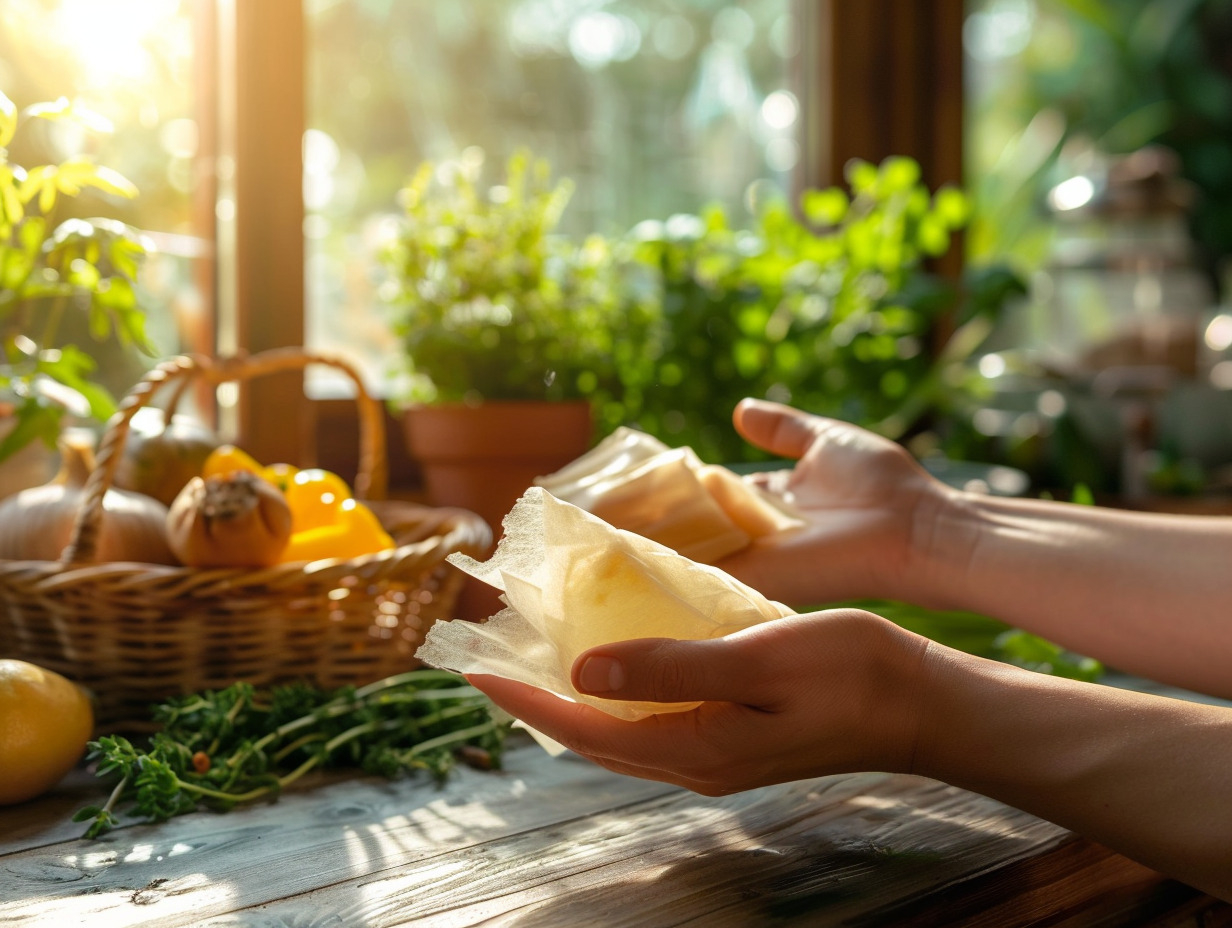
In light of the limitations of Bee Wrap, the market offers sustainable alternatives for food preservation. Eco-friendly food film comes in various materials such as hemp, linen, or natural cotton. These options refresh the aesthetics of food preservation while maintaining ecological benefits. Their durability, often superior to that of Bee Wrap, makes them serious competitors, capable of retaining moisture and providing food with freshness and flavor over an extended period.
The transition to these new eco-friendly packaging options is part of a movement to replace plastic films and aluminum papers, traditionally used in households. These films aim to be more environmentally friendly and promote long-term use, thereby reducing waste production. They align with a dynamic of responsible consumption, where every choice is weighed based on its environmental impact.
However, the selection of these newcomers in the eco-friendly packaging market should not be taken lightly. Consider the source of materials, ease of maintenance, and performance in terms of preservation. All these criteria must be evaluated to ensure that the chosen solution is truly beneficial for both the user and the planet. Eco-friendly food film, by surpassing the limitations of Bee Wrap, thus emerges as a key player in green innovation in the field of food preservation.