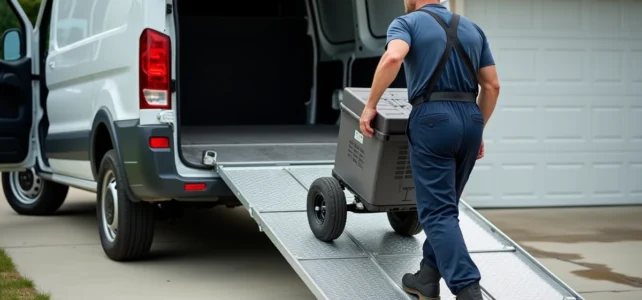
A loading ramp allows you to overcome a height difference between the ground and the platform of a utility vehicle, trailer, or truck. Its role is to create a sufficiently stable and grippy incline to roll equipment, a motorcycle, a loaded hand truck, or any heavy equipment.
At Brico Dépôt, the catalog mainly offers models made of galvanized steel aimed at individuals and occasional DIYers, at prices significantly lower than those of specialized construction equipment distributors.
Height to overcome and ramp length: the calculation that product sheets do not explain
Most buyers focus on the load capacity indicated on the packaging. This data matters, but it is not enough. The length of the ramp determines the angle of inclination, and it is this angle that conditions the safety of the loading.
The greater the height to be overcome relative to the length of the ramp, the steeper the slope will be. A slope that is too steep prevents a tracked vehicle from ascending properly and causes a loaded hand truck to tip backward. For a standard trailer tailgate, a ramp that is too short forces you to exert effort, which wears down the edges and increases the risk of slipping.
Before choosing a model, measure the exact height between the ground and the edge of the platform. Compare it to the length of the desired ramp. A ratio of at least one to four (one meter of height for four meters of ramp) provides a comfortable slope for most DIY uses. The models sold at Brico Dépôt offer varying lengths: check this ratio before finalizing your cart.
If you are looking for a broader overview of this type of equipment, a detailed comparison on the Brico Dépôt loading ramp lists the main references with user feedback.
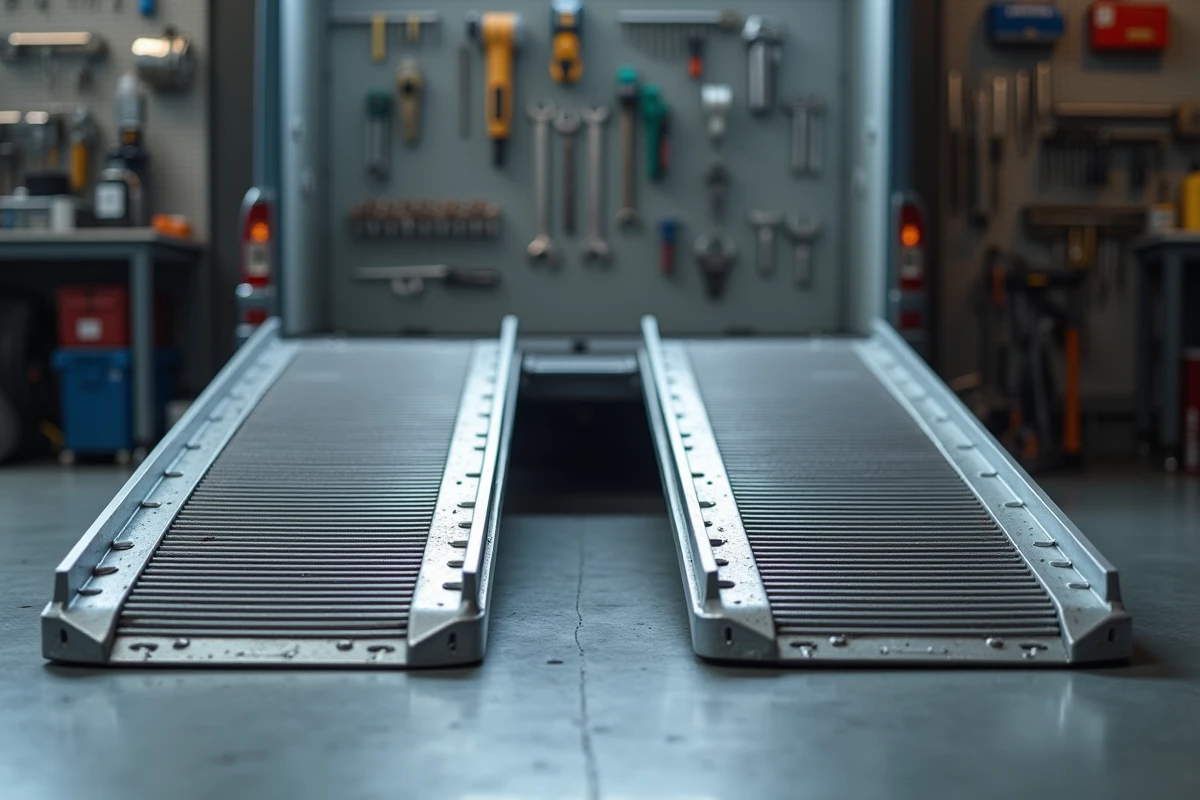
Galvanized steel or aluminum: which material for which use
The ramps available at DIY superstores are divided into two material families, and the choice between the two is not trivial.
Galvanized steel ramp
Galvanized steel is resistant to corrosion thanks to its zinc surface treatment. It supports heavy loads and withstands impacts without deforming. In return, a steel ramp weighs significantly more than an aluminum model, which complicates handling for a single person.
The steel models offered at Brico Dépôt target occasional to moderate use: loading a riding mower, tiller, recreational motorcycle. Their price remains accessible, often half that of an aluminum ramp of equivalent dimensions.
Aluminum ramp
Aluminum offers a compromise between lightness and robustness. A pair of aluminum ramps is easy to transport and can be stored in a vehicle trunk. Aluminum is the preferred material for frequent use or for users who need to move their ramps from one job site to another.
This type of ramp is more expensive to purchase. Brico Dépôt references a few models, but the range is more limited than that of specialized transport equipment distributors.
Ground stability and non-slip surface: the underestimated criteria
User feedback on specialized forums regularly highlights a recurring problem: the ramp slips on the ground during loading. This defect has nothing to do with load capacity. It relates to three elements that product sheets rarely mention in detail.
- Stabilizing pads or stops: some models have hooks that anchor to the edge of the tailgate, while others simply rest on the ground. Models without fixation are more versatile but less stable under heavy load.
- The running surface: a ribbed or perforated profile improves grip, especially in wet weather. Smooth galvanized steel ramps become slippery as soon as it rains.
- Side edges: they prevent a wheel or track from leaving the ramp during ascent. On entry-level models, these edges are sometimes absent or too low to effectively guide equipment.
These three points deserve verification in-store. Online photos do not always allow for assessing the actual height of an edge or the depth of the ribs.

User reviews on Brico Dépôt ramps: what comes up most often
Online discussions about ramps sold at Brico Dépôt highlight a few constants. The quality-price ratio is praised: for home DIY use, these ramps fulfill their function without straining the budget.
Critiques almost always revolve around the same topics. The usable width is sometimes considered too narrow for certain equipment (wide riding mowers, quads). Several users recommend measuring the exact spacing of the wheels of the equipment to be loaded and comparing it with the width of the ramp, not with the overall width that includes the edges.
Another point raised: foldable models save space when stored, but their hinges constitute a weak point in the long term. For intensive use, a monobloc ramp remains more reliable than a foldable model.
In-store service varies by local stores. Some users report irregular stock on loading ramps, as these products are not permanent references in all depots. Checking online availability before going to the store avoids an unnecessary trip.
The choice of a loading ramp relies more on compatibility with your trailer and equipment than on the advertised capacity alone. Take your measurements, check the fixation system, and prioritize a suitable non-slip surface for your usage conditions: these three precautions significantly reduce the risk of unpleasant surprises on first use.