
The C1E licence authorises drivers to operate a vehicle weighing between 3.5 and 7.5 tonnes towing a trailer weighing more than 750 kg, provided the authorised gross train weight does not exceed 12 tonnes. Obtaining this category involves several steps, from the medical examination to applying for the full licence, and a delay at any stage can hold up the entire process. Coordinating these steps helps avoid an interruption to work that could last several weeks.
Medical examination and test slot: coordinate your schedule to avoid an interruption
Most candidates focus on driving lessons first and put off the medical examination. Problems arise when an appointment with an approved doctor is scheduled after the test date booked by the driving school.
The medical examination is required not only for the initial application but also to renew the C1E category. If the expiry date passes, the category is no longer valid, and a favourable medical opinion is not always enough to allow you to resume driving immediately. Renewal periods vary according to age, making it especially useful to check the expiry date for your specific category (Articles R. 221-10 and R. 221-11 of the French Highway Code).
Driving schools that prepare candidates for heavy vehicle categories book practical test slots through a centralised professional platform. This can extend the time between completing training and taking the test. Booking your medical examination at the start of your training, rather than at the end, helps align the two deadlines.
Choosing a C1E heavy vehicle licence course at a centre that also handles the administrative process makes it easier to coordinate these steps.
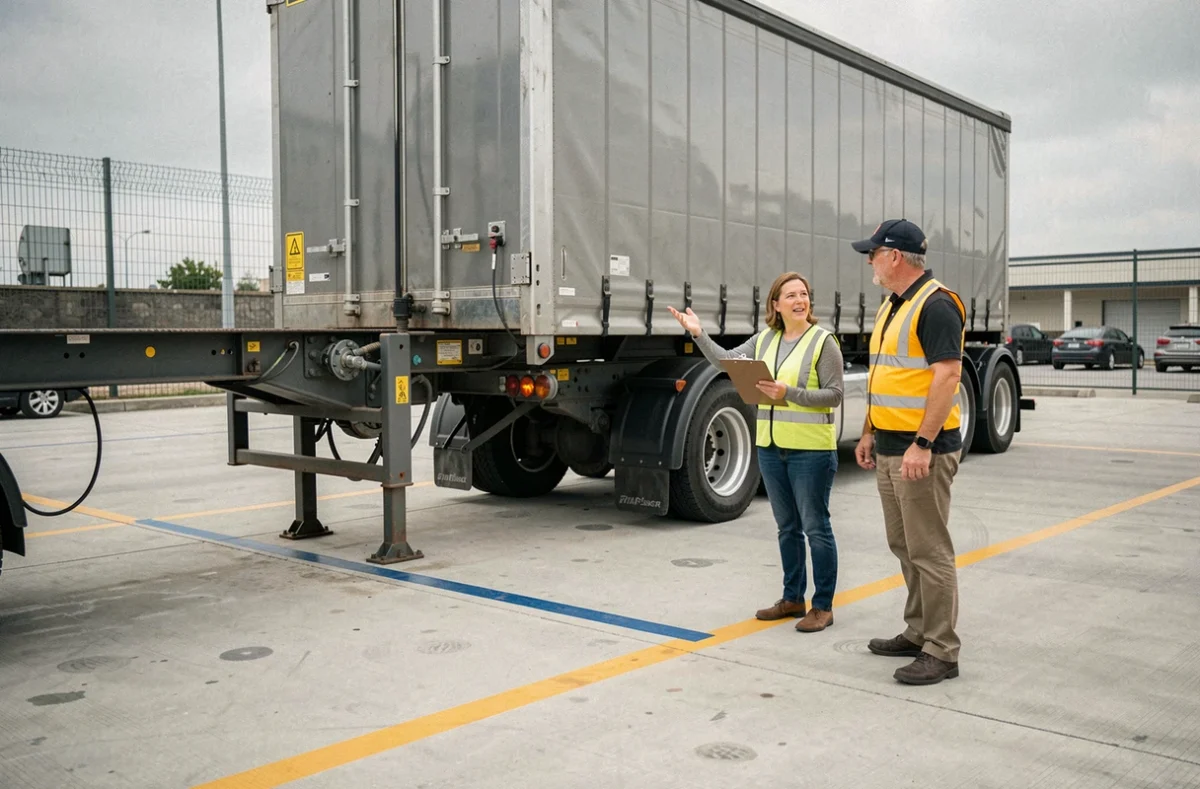
C1E licence prerequisites: age, C1 licence and fitness to drive
Before enrolling, you must meet all three of the following conditions.
- Hold a valid C1 licence. The C1E is an extension: you cannot enrol without a valid C1 category.
- Be at least 18 years old, unless you are enrolled in vocational driver training (CAP, vocational baccalaureate or professional qualification).
- Have a favourable medical opinion issued by an approved doctor, valid on the date of the test.
European nationals (EEA, Switzerland, Andorra and Monaco) must provide proof of personal or professional ties to France for at least six months. Candidates from outside the EEA should check the rules that apply to their specific circumstances.
C1E practical training: off-road and on-road tests
Training combines classroom (or online) lessons covering regulations with driving practice in a vehicle-and-trailer combination. The number of hours depends on the training centre and the candidate’s experience.
Off-road test: a mandatory qualifying stage
This first test is a screening stage. It consists of three separate parts:
- A written test on transport regulations and road safety.
- Safety checks on the vehicle and trailer (brakes, lights and load securing).
- A coupling or reversing manoeuvre, assessed for accuracy and compliance with procedures.
Passing the off-road test is a prerequisite for taking the on-road test. Failing at this stage means booking another slot, which extends the overall process.
On-road test: one hour of assessed driving
The on-road test lasts one hour. The examiner assesses the candidate’s driving in real-world conditions, including managing the trailer’s path, anticipating hazards, obeying road signs and adapting to other road users.
Controlling the trailer when cornering and reversing accounts for a significant part of the assessment. Candidates who have only driven rigid trucks often underestimate the time needed to adjust to driving an articulated vehicle combination.
Funding your C1E licence with CPF: conditions to check
The C1E licence remains eligible for funding through the Compte personnel de formation (CPF), even after tighter access rules were introduced for certain light vehicle licences. Two conditions apply:
Candidates must demonstrate a professional project related to transport or securing their career path. A personal wish alone is not enough. In addition, any current licence suspension or driving ban makes the application ineligible.
Checking your eligibility before signing a training agreement helps avoid finding out that your funding application has been rejected after lessons have begun.

After passing: CEPC and application for the full licence
If you pass the on-road test, you will receive a driving test certificate (CEPC). This document serves as a driving licence in France for a limited period, while the authorities issue a licence showing the new category.
You must apply for the licence online through the ANTS website. During this transitional period, the CEPC and a form of identification are sufficient to drive a vehicle-and-trailer combination in France.
A common pitfall is failing to submit the ANTS application within a few days of passing. It can take several weeks to produce the licence, and an expired CEPC without the licence having arrived creates an administrative gap that legally prevents you from driving. Starting this process the day after the test is the most reliable way to keep your professional activity running without interruption.