
A harmonious garden is built on a principle that is often overlooked: its ability to function just as well during drought as during periods of intense rainfall. Choosing plants and natural materials is not enough if the soil cannot retain or drain water properly. Water management, ground permeability and the protection of nocturnal biodiversity must all be factored into the design from the outset.
Soil permeability and rainwater management in the garden
Before you plant anything, the soil sets the rules. A surface described as permeable does not, by itself, guarantee good water infiltration. How it actually performs depends on the type of soil (clay, sandy or silty), how compacted it is and the slope of the land. Gravel laid over a compacted clay layer will let water run off just like a concrete slab.
For a well-planned garden, you need to decide where excess water will go. A swale—a shallow, planted ditch—can collect runoff and become a planted feature in its own right. A rain garden works on the same principle: a shallow depression collects surface water and allows it to seep into the ground slowly.
Local planning rules (PLU) or stormwater zoning regulations may require specific approaches to managing water on your property. Checking these requirements before designing a natural stone path or building a wooden deck can save you from having to redo everything later.
Specialist resources offer detailed guidance on combining plants, materials and techniques for natural gardens: https://www.traditionjardin.fr features approaches that take these site-specific considerations into account.
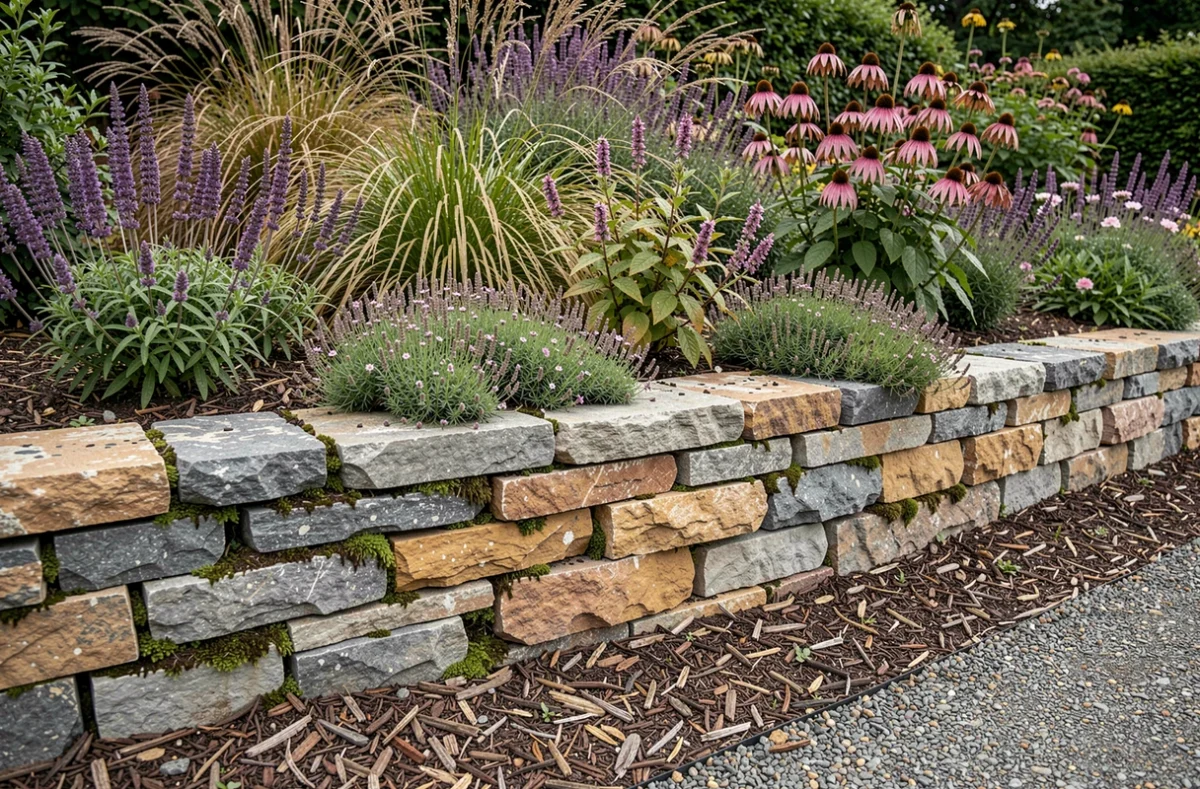
Drought-tolerant plants and watering restrictions
Watering restrictions vary depending on location and drought severity. They also apply to private gardens and change as prefectural orders are issued. The public service VigiEau lets you check the rules that apply to your address before designing a water-hungry flower bed.
Designing a harmonious garden means preparing for these periods rather than simply enduring them. Choosing plants suited to the local climate is the foundation of this resilience.
How to choose the right plants
- Biogeographic origin: Mediterranean plants such as lavender, rosemary and rockrose naturally tolerate weeks without rain, while a typical hydrangea will wilt as soon as the first watering restrictions take effect
- Root system: deep-rooted perennials such as yarrow, gaura and Russian sage draw water from deeper in the soil and need little watering once established, unlike annuals with shallow roots
- Ground cover: organic mulch (shredded branches, fallen leaves, hemp straw) reduces evaporation and suppresses weeds without the need for synthetic landscape fabric
Mulch brings plants and natural materials together. Applied in a sufficiently thick layer, it shields the soil from direct sunlight, feeds microbial life as it decomposes and maintains consistent moisture even in dry weather.
Natural materials for defining spaces without sealing the ground
Stone, wood, gravel and terracotta give a garden its character while respecting the water cycle, provided they are installed correctly.
Natural stone and gravel for paths
A stepping-stone path, with stone slabs spaced apart over a gravel bed, lets water seep between each slab. Crushed gravel laid on a bed of sand without a binding agent remains permeable as long as it is not compacted by heavy use. For garden walkways, it offers a solid balance of appearance and practicality.
Locally sourced stone has an often-overlooked advantage: it blends visually with the surrounding landscape. Pale limestone in a limestone region, slate in slate country. Visual harmony also comes from geological consistency.
Wood and planted borders
Untreated wood (chestnut, black locust, Douglas fir) naturally withstands moisture without chemical products. It can be used to edge flower beds, build raised planters or line paths. Its lifespan varies depending on the species and exposure, but these hardwoods last for several years without treatment.
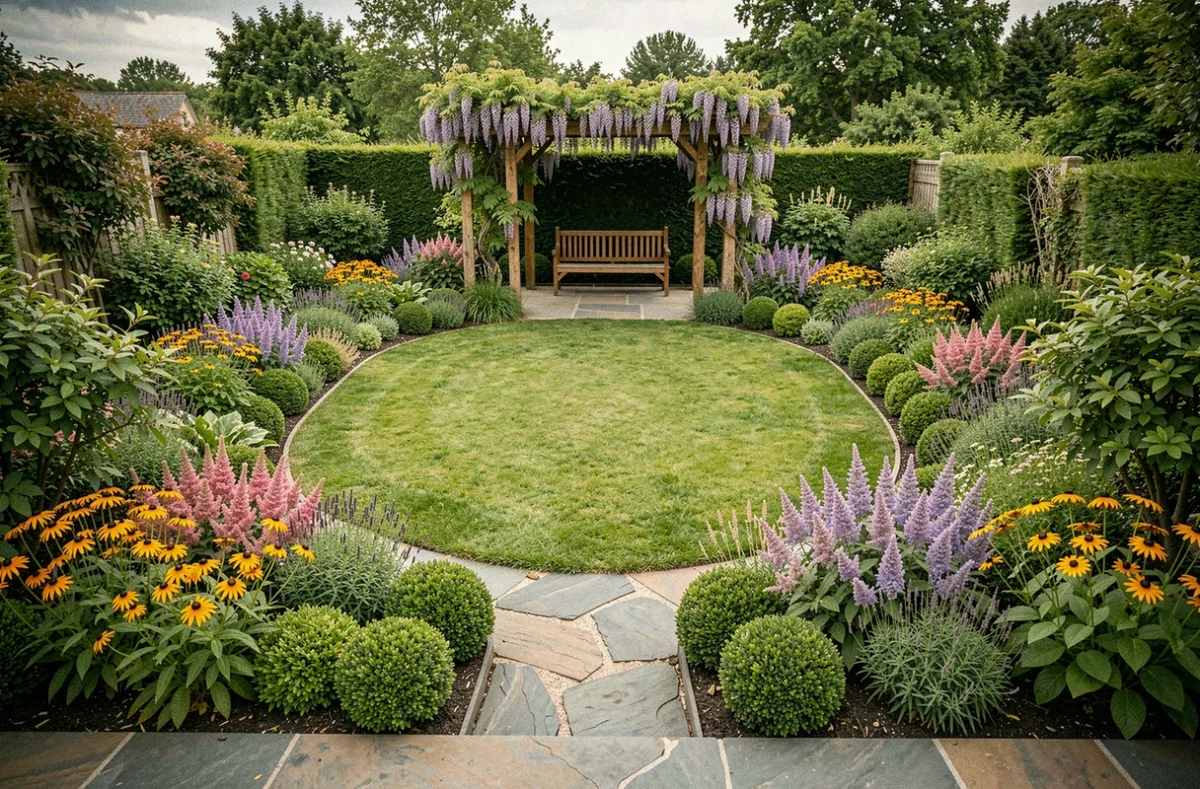
Planted borders (boxwood, lavender cotton or low-trimmed lavender) replace plastic or concrete edging. They add structure without obstructing water flow.
Night-time lighting and protecting garden biodiversity
Garden design does not stop at sunset. Artificial light at night disrupts wildlife movement and biological rhythms, affecting pollinating insects, bats and migratory birds. Poorly directed lighting turns an aesthetic issue into an ecological one.
Two principles can reduce these impacts without compromising comfort:
- Point lights towards the ground, directing the beam downwards rather than towards the sky or sideways, to limit unnecessary light spill
- Switch lights off when they are not needed, or fit them with motion sensors so they only come on when someone passes by
- Choose warm (amber) colour temperatures instead of cool white LEDs, which are more attractive to nocturnal insects
Protecting the night sky is receiving increasing attention, including in private gardens. Public consultations aim to add new sites to initiatives that preserve sky quality.
Designing a harmonious garden that lasts without shifting the problems elsewhere
A garden designed with natural materials and suitable plants only makes sense if it works as a system. Water falling on the patio should be able to reach the soil without running off into a neighbour’s garden. The plants you choose should withstand watering restrictions without constant help. Lighting should serve garden users without disturbing the wildlife that lives there at night.
This approach takes a little more thought upfront than choosing attractive plants and on-trend materials from a catalogue. The result is an outdoor space that becomes more self-sufficient over time, rather than demanding ever more maintenance, water and energy.