
A Mister Freeze popsicle weighs so little in the hand that one forgets to ask what it contributes to a daily caloric intake. The data available from nutritional databases show surprisingly low values for this frozen tube, but they vary depending on the exact reference, format, and platform consulted. This article compares the published figures, identifies discrepancies, and measures what this water ice really represents compared to other summer desserts.
Nutritional table of Mister Freeze: what the databases say
The nutritional values of a Mister Freeze circulate across several food aggregators, but the discrepancies between sources deserve careful examination. Here are the data published by the main platforms referenced in search results.
| Source | Serving | Calories | Carbohydrates | Fats | Proteins |
|---|---|---|---|---|---|
| les-calories.com | 1 popsicle (20 ml) | 8 kcal | 2 g | 0 g | 0 g |
| FatSecret | 100 ml | 47 kcal | 11.5 g | 0 g | 0 g |
The page les-calories.com specifies that one popsicle corresponds to 20 ml and provides 8 kcal, exclusively in the form of carbohydrates. FatSecret, on the other hand, lists 47 kcal for 100 ml of “Mr Freeze Water Ice,” with 11.5 g of carbohydrates.
When relating the 47 kcal for 100 ml to a 20 ml serving, one gets just under 10 kcal, which remains consistent with the 8 kcal reported by the other database. The information on calories in a Mister Freeze confirms this very low range, provided we are talking about the standard format.
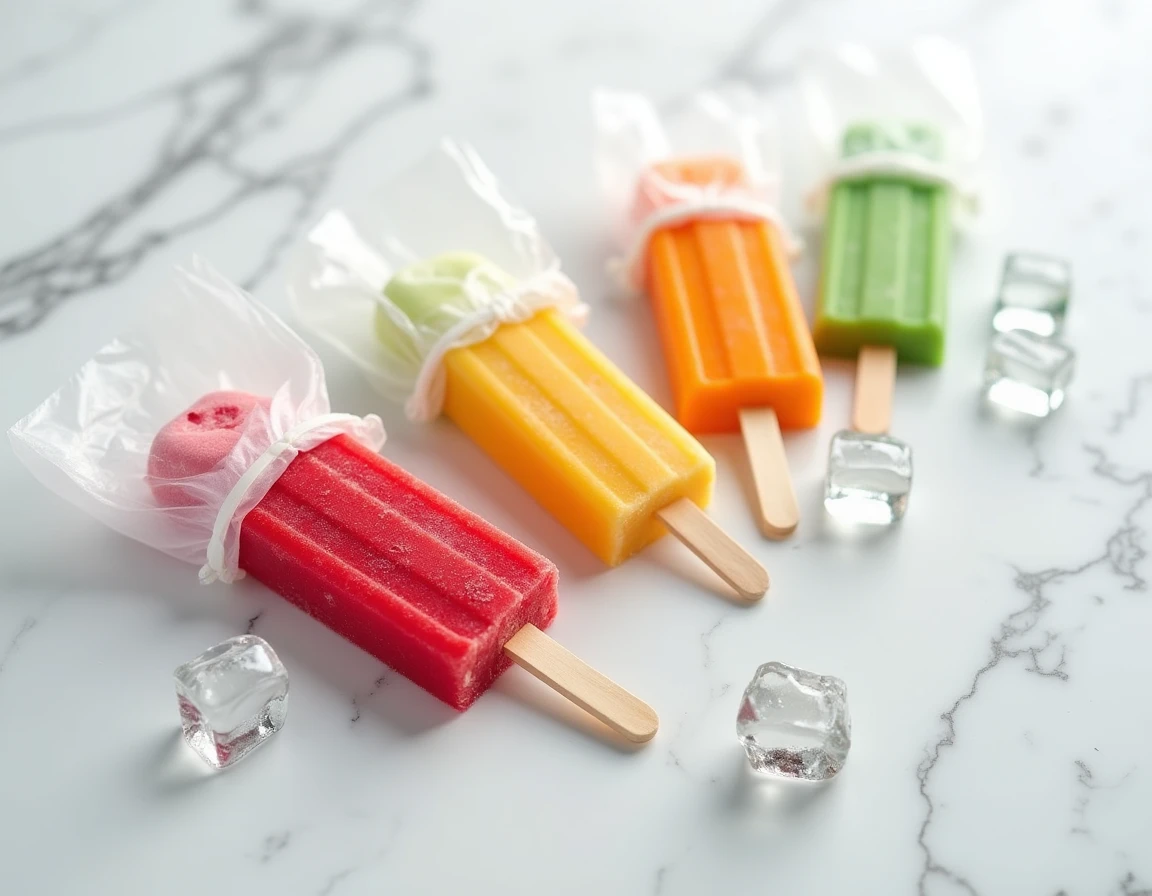
Dispersion of values by format and flavor of Mister Freeze
The fact that FatSecret and Nutracheck list “Mr Freeze” and “Mr Freeze Water Ice” as separate products reveals a problem of granularity. Not all Mister Freezes are equal in nutritional terms.
Several factors explain these discrepancies:
- The format of the popsicle varies by range. The classic 20 ml tube does not have the same volume as the “Jubbly” versions of 62 ml, which logically contain more sugar and calories per unit
- The composition differs from one flavor to another. Databases generally do not specify which flavor has been analyzed, making any comparison approximate
- The ranges evolve over time. A reformulated product (less sugar, addition of sweeteners) may coexist with old nutritional sheets that have never been updated
The value of 8 kcal per popsicle only applies to the standard 20 ml format. For a larger tube or a cola-type variant, the total can be significantly different. Checking the label on the package remains the only reliable method.
Mister Freeze compared to other summer frozen desserts
The most useful angle for situating the Mister Freeze is not its absolute value, but its relative position among frozen snacks consumed in summer. The article from Cosmopolitan ranks this type of water ice among the least caloric options in the frozen aisle.
The reason lies in its composition: a water ice contains neither fat nor protein. The calories come solely from the sugar dissolved in water. In comparison, a classic ice cream combines sugar, dairy fat, and sometimes inclusions (chocolate chips, caramel), which multiplies the caloric density per serving.
A vanilla-chocolate ice cream cone sold in supermarkets provides several times more calories than a standard Mister Freeze popsicle. Ice cream bars like Eskimo pies or coated popsicles also rank much higher due to their chocolate coating and creamy base.

However, this caloric lightness is also explained by the tiny volume of the serving. 20 ml of product is barely two tablespoons. Consuming three or four in a row on a hot afternoon is not uncommon, and the total caloric intake then approaches that of a classic frozen dessert.
The trap of the declared serving
Nutritional databases systematically display values for “1 unit” or “100 ml.” None of the contents referenced in the search results address the issue of actual consumption per occasion. A child grabbing a bag of Mister Freeze from the freezer rarely eats just one.
The caloric balance depends on the number of popsicles consumed, not on the sheet of a single tube. Three classic popsicles represent about 24 kcal, which remains modest. Six popsicles double this total but still stay below 50 kcal. Even in a generous consumption scenario, Mister Freeze remains lighter than most creamy alternatives.
Reliability of nutritional sources on Mister Freeze
The data available online comes almost exclusively from aggregators like FatSecret, Nutracheck, or les-calories.com. No official sheet from the manufacturer (Jel Sert) appears in the top French search results.
This absence of a primary source poses a verification problem. Aggregators often operate through community input: a user scans the label, enters the data, and the sheet is published. Input errors or confusion between formats are not uncommon.
For a product as low in calories, a small input error changes little in the final result. The margin of uncertainty between 8 and 10 kcal per popsicle has no practical impact on a diet. Where caution is warranted is with less common variants (family formats, specific flavored ranges) whose sheets may be absent or outdated.
The classic 20 ml Mister Freeze hovers around 8 kcal per popsicle, composed solely of sugar and water. This data, consistent across the various consulted databases, makes it one of the least energy-dense frozen snacks. The variable that changes everything is not the product itself, but the number of tubes that disappear from the freezer between noon and snack time.