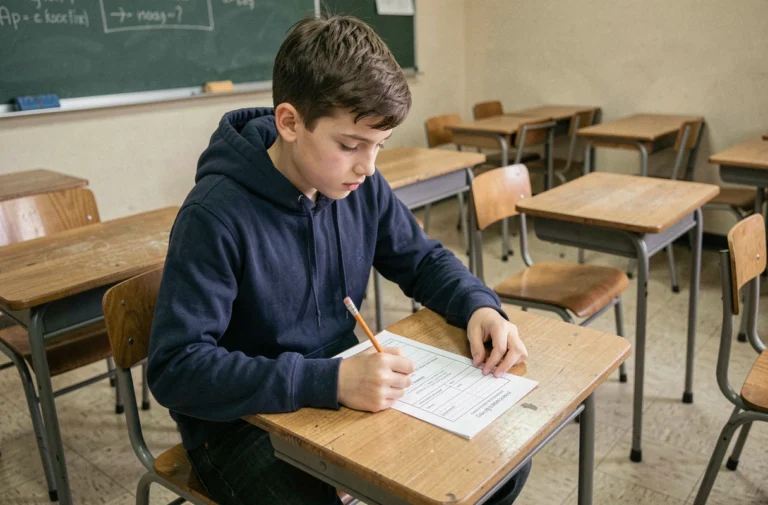
A cold figure: each year, several hundred independent candidates attempt the PASS exam, determined to disregard the established paths. However, the game is neither simple nor uniform. This parallel route often escapes the logic of lecture halls and academic routines, forcing one to reinvent all their reference points.
The rules of the game differ from one university to another. Some close the door to non-registered candidates, while others accept atypical profiles under their own conditions. The result: no single framework. Preparing for the PASS exam as an independent candidate means accepting to navigate without a safety net, adjusting one’s method at each step, and composing without the comfort of an official framework.
The PASS as an independent candidate: understanding the curriculum and its specific stakes
Embarking on the PASS exam as an independent candidate means first grasping the effects of the reform of health studies: the PACES has given way to a more open but dauntingly demanding path. The PASS, this famous specific health access pathway, is now the gateway to medicine, midwifery, dentistry, pharmacy, and sometimes physiotherapy, depending on the institution. The scientific foundation (biology, physics, chemistry) remains uncompromising, but it is now accompanied by a disciplinary minor outside of health, which must be chosen carefully. Law, humanities, mathematics: all these options, far from being anecdotal, become a major asset to bounce back if the MMOP selection fails.
As an independent candidate, one must advance without a safety net. No traditional registration, no access to lectures, nor to institutional study groups. It is impossible to rely on the educational resources of the university. Autonomy is no longer a choice; it is the rule. To endure, one must organize in advance: find reliable materials, create or join a support network, and adhere to a strict discipline. Above all, do not neglect the human and social sciences, which are often decisive in the oral exams, at the expense of pure scientific subjects.
The choice of the minor requires serious reflection. It is about aiming for a field in which one feels solid, but also one that is sufficiently promising to consider a degree if the health pathway closes, at least temporarily. Success in the first year is just a milestone: one must consider the future, envision a plan B without losing sight of the main objective. To decipher all the details of the PASS exam as an independent candidate, the article “Concours de médecine en candidat libre : possibilité et conseils pour réussir – Annonces Emploi” highlights the necessity to adapt, to know precisely the expectations of the universities, and to rely on all available resources outside the traditional circuits.
What steps to take to register and succeed in admission as an independent candidate?
Accessing the PASS as an independent candidate means navigating an administrative path with no room for error. The first step: compile a complete file on the platform messervices.etudiant.gouv.fr. Every date matters. Failing to adhere to the post-bac admission timeline can be enough to disqualify a file. The universities of Paris, Lyon, Bordeaux, Montpellier, to name a few, require strict documents: identity proof, proof of level, motivation letter, and sometimes high school transcripts. The rules change from one campus to another; it is essential to inquire precisely with the targeted institution.
The choice of university is not trivial. It determines the content, the organization of teaching, but also the registration modalities for each exam. Depending on the institution, the procedures may be done exclusively online. No tutoring, no tailored educational platform, nor in-person classes to cling to. It is up to the independent candidate to manage everything alone. The possibility of trying again the following year is not guaranteed: some institutions strictly regulate this second application, so it is better to check the re-registration conditions from the start.
The selection relies on several tests: MCQs, written exams, oral exams, the formula varies from one university to another, and the number of places fluctuates depending on the field. Improvisation is impossible. One must anticipate, break down the program, and structure their revisions. This discipline, these methodical choices are the compass for the independent candidate, the only way to cross the first barrier to health studies.

Practical tips and resources to excel in exams and oral presentations
Mastering preparation: organization, planning, and targeted revisions
To calmly tackle the workload of teaching in the PASS, it is essential to build a rigorous schedule. The days should alternate subjects, physics-chemistry, biology, human sciences, to avoid saturation and reinforce the anchoring of knowledge. Time management is a skill to be learned, and setting weekly goals ensures nothing is left to chance. It is also about identifying the key concepts to master: MCQs, document analyses, course summaries.
Here are several effective levers to increase efficiency in this preparation:
- Regularly practice MCQs: repetition builds the expected reflexes for the big day.
- Rephrase difficult points out loud, either alone or in front of a small group: verbalization accelerates memorization.
- Consult the past papers from the universities of Paris, Lyon, or Bordeaux to familiarize yourself with the format of the exercises and anticipate expectations.
Approaching the oral exam: method, confidence, and authenticity
The oral of the PASS leaves no room for improvisation. It evaluates the clarity of reasoning, the ability to defend an idea, and to illustrate one’s statements with concrete examples from the MMOPK fields: medicine, midwifery, dentistry, pharmacy, physiotherapy. Preparing a structured presentation, practicing speaking in front of someone close, managing stress, and timing interventions are essential exercises. Authenticity is where motivation shines through best.
The collective, even from a distance, changes the game. Building connections with other independent candidates, sharing materials and tips, solving conceptual blockages together: this solidarity fosters motivation and breaks isolation. Specialized forums, online study groups, sharing MCQs and notes are all resources to mobilize throughout the year.
When doubt creeps in, one must remember the goal: to secure a place in health training, without sacrificing balance. As the second group exams approach, preserving mental and physical energy becomes a challenge in itself. Success in the PASS as an independent candidate also lies in the ability to endure, to stay on course, and to adapt, no matter what happens.